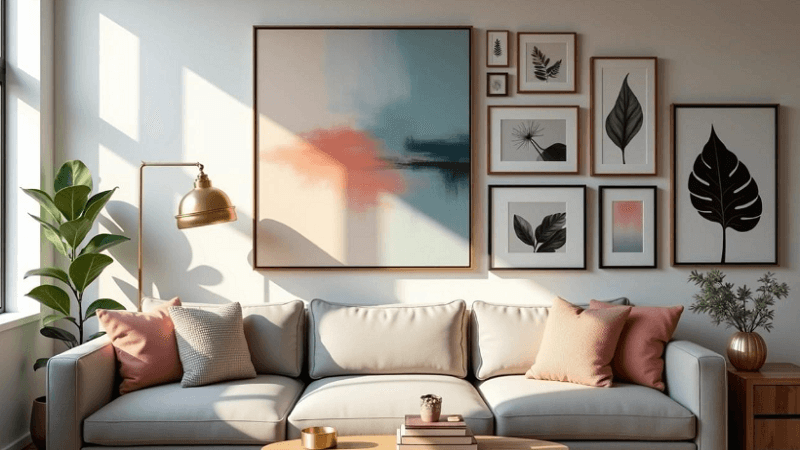
Art brings warmth and personality to your home. The right artwork creates spaces you truly love. Many people feel overwhelmed at first when trying to find perfect pieces for each room.
The process becomes much easier with a few simple tips. The art world offers endless possibilities. A practical approach helps us get started with picking the right pieces. This piece will guide you through specific strategies to select artwork that enhances every space in your home. You’ll learn everything from choosing statement pieces for your living room to finding calming imagery that belongs in your bedroom.
Living Room
Your living room is where everyone gathers, so the art you choose matters a lot. The pieces you select will set the mood for your entire home and leave lasting impressions on everyone who visits.
Choose a focal point for the space
A visual anchor draws the eye in every living room. Art can boost an existing focal point or create one where you need it. The walls facing main entrances work best for statement pieces. You’ll find common focal points above sofas, fireplace mantels, or between windows.
Rooms with architectural features like exposed brick or ceiling beams need art that adds to their charm without overwhelming them. A bold wallpaper or large-scale artwork can create a focal point in rooms that lack natural ones.
Use large or grouped pieces for balance
Size plays a crucial role in living room art selection. Large walls need oversized pieces that make an impact, especially when subtle textures and organic imperfections, often found in wabi sabi paintings, are given enough space to stand out. Artwork placed above furniture should take up about two-thirds to three-quarters of the furniture’s width to feel visually balanced.
Smaller pieces can be just as effective when grouped thoughtfully. A gallery wall or symmetrical arrangement allows softer, understated works, including wabi sabi paintings, to create presence without overwhelming the room. The center of your art should sit at eye level, usually 57–60 inches from the floor. Leaving a 4–6 inch gap between furniture tops and artwork bottoms helps maintain a calm, cohesive visual flow.
Reflect personality through subject matter
Living room art lets you show who you are. Bold abstracts might reveal your energetic spirit, while landscapes could show your love for nature. Your color choices often hint at emotional needs—blues bring calm, bright colors add energy. Pick pieces that start conversations or remind you of special places. Your art tells your story silently—it’s like a visual diary on your walls.
Work Room
Your work space needs art that serves two purposes—it should enhance esthetics and support increased efficiency. The art choices in your work area should stimulate the right mental state for focused tasks, unlike social areas of your home.
Inspire creativity with abstract or motivational art
Abstract artwork works well in work environments because it encourages open thinking and supports problem-solving beyond literal interpretation. Shapes, textures, and layered colors can gently challenge the mind and help unlock new perspectives during demanding tasks.
Personal creations can have an even stronger effect. Displaying something you made yourself—such as a clay craft, a small sculpture, or a finished painting—creates a sense of ownership and quiet confidence in your space. These pieces act as visual proof of progress and patience, which can be grounding during long or complex workdays.
Even for those who do not consider themselves creative, guided projects like Number Artist premium kits make it easy to complete a polished piece that still carries personal meaning. Seeing your own work on the wall reinforces focus, motivation, and a deeper connection to the space where ideas take shape.
Motivational art with thoughtful affirmations or subtle quotes can add another layer of encouragement. Studies show that visual prompts in work environments help reinforce positive habits and maintain momentum, especially during mentally demanding periods.
Use calming tones to reduce stress
Color psychology is a vital part of your work environment’s success. These evidence-based color choices will give a calm, focused workspace:
- Blues and greens create a relaxing, stress-free atmosphere that promotes concentration
- Light, muted tones (not icy or harsh colors) support a professional feeling
- Warmer yellows and oranges can energize and spark creativity
Your stress levels are affected by contrast levels too. Low-contrast color palettes create calm and work best in therapy or counseling spaces. Medium to high-contrast combinations might better serve your efficiency if you need energy for creative tasks.
Bedroom
Your bedroom is a personal sanctuary where you can rest and recharge. Art plays a significant role in this intimate space to create an atmosphere that helps you sleep peacefully and wake up refreshed.
Select serene and restful imagery
Your bedroom needs art that calms you rather than excites. Nature-inspired scenes like misty forests, calm ocean waves, and sunset landscapes bring tranquility and deep relaxation. Dreamlike themes and luminous photography boost the restful ambiance of your sleeping space. Abstract compositions with flowing brushstrokes or delicate botanical prints help create a peaceful environment that melts away daily stress.
Use soft colors and minimal designs
Color psychology matters deeply in bedroom spaces. You can think about these palette options:
- Soft neutrals (beige, ivory, taupe) create a timeless, calming backdrop
- Gentle pastels (lavender, blush, mint) add subtle personality
- Muted blues and greens mimic natural elements like water and foliage
Minimalist or abstract designs with clean lines help create an uncluttered atmosphere. These simpler compositions let your mind settle and prepare you for restful sleep.
Place art above the bed or on nightstands
Art positioned above your bed becomes a natural focal point. Your pieces should span about two-thirds the width of your headboard. The right placement is 6-12 inches above the headboard—higher placement disconnects it from the bed, while lower risks interference. Your nightstands work great for smaller pieces measuring 12×16 to 24×24 inches.
Dining Area
Your dining area is the social hub of your home where art plays a vital role to boost the ambiance and make meals more enjoyable.
Encourage conversation with bold or thematic art
Wall art transforms the dining room’s atmosphere instantly. It makes daily meals welcoming and turns simple gatherings into memorable occasions. Bold oil paintings or graphic prints create energetic, social vibes. Nature scenes or abstract shapes in soft colors work well to create a relaxed atmosphere. The right artwork on your walls sets a perfect backdrop for meaningful conversations at the table.
Use still lifes or food-related subjects
Food art has deep historical roots. Ancient Greeks and Romans displayed fruit paintings as status symbols. Renaissance masters created lifelike works that showed exotic foods on rich velvets. Still life compositions bring timeless charm to modern dining spaces. Art pieces showing food, flowers, or dining items celebrate simple beauty and create an appetizing environment for meals.
Match frame style with dining furniture
Your choice of frames makes a big difference. Black frames give a contemporary look with modern dining furniture. Wood frames work perfectly with traditional or rustic tables. Gold or ornate finishes complement formal dining sets beautifully. The frame’s material and finish should match your existing furniture to create a unified dining esthetic.
Consider gallery walls for visual interest
Gallery walls add character and make dining spaces feel curated. Your gallery wall can include:
- Black and white family photos
- A mix of abstract prints
- Food and drink illustrations
- Vintage posters or maps
The arrangement should be centered above your table to anchor the space. Frames need one shared element—color, material, or shape—to look cohesive.
Balance size with table and wall dimensions
Your artwork should measure about two-thirds of your dining table’s or buffet’s width for the right proportion. Big walls need large pieces or gallery arrangements. Smaller spaces look better with medium-sized prints hung in a row. The artwork’s center should hang 57-60 inches from the floor. This height works well for both seated and standing viewers.
Conclusion
Thoughtfully chosen artwork helps shape how each room feels and functions. Living room pieces set the overall tone of your home, work spaces benefit from art that supports focus and creativity, bedrooms feel more restful with calm imagery, and dining areas come alive with artwork that encourages conversation.
Scale, placement, and color all play an important role, but the strongest connection comes from choosing pieces that resonate with you personally. Art that reflects your taste and experiences brings lasting comfort and character to your space.
Approach your home one room at a time and trust your instincts as your collection grows. When art feels meaningful, it naturally turns a house into a home.